




When generating meshes for FEM/FVM computations, sometimes your geometry is so simple
that you don't need a complex mesh generator (like
pygmsh,
MeshPy,
mshr,
pygalmesh,
dmsh),
but something simple and fast that makes use of the structure of the domain. Enter
meshzoo.
Installation
Install meshzoo from PyPI with
pip install meshzoo
How to get a license
Licenses for personal and academic use can be purchased
here.
You'll receive a confirmation email with a license key.
Install the key with
plm add <your-license-key>
on your machine and you're good to go.
For commercial use, please contact support@mondaytech.com.
Examples
Triangle
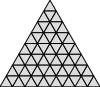
import meshzoo

bary, cells = meshzoo.triangle(8)

# corners = np.array(
#     [
#         [0.0, -0.5 * numpy.sqrt(3.0), +0.5 * numpy.sqrt(3.0)],
#         [1.0, -0.5, -0.5],
#     ]
# )
# points = np.dot(corners, bary).T

# Process the mesh, e.g., write it to a file using meshio
# meshio.write_points_cells("triangle.vtk", points, {"triangle": cells})
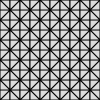
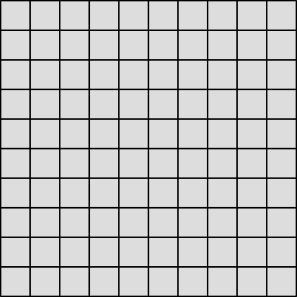
Rectangle
 |
 |
import meshzoo
import numpy as np

points, cells = meshzoo.rectangle_tri(
    np.linspace(0.0, 1.0, 11),
    np.linspace(0.0, 1.0, 11),
    variant="zigzag",  # or "up", "down", "center"
)

points, cells = meshzoo.rectangle_quad(
    np.linspace(0.0, 1.0, 11),
    np.linspace(0.0, 1.0, 11),
    cell_type="quad4",  # or "quad8", "quad9"
)
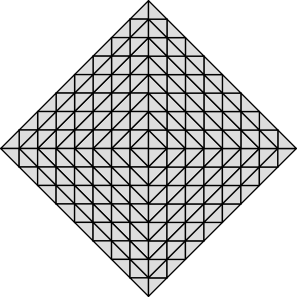
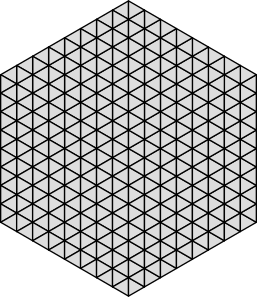
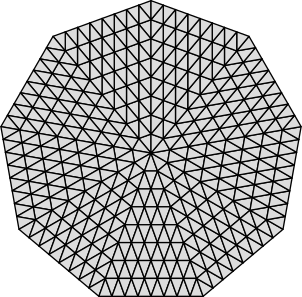
Regular polygon
 |
 |
 |
|---|---|---|
meshzoo.ngon(4, 8) |
meshzoo.ngon(6, 8) |
meshzoo.ngon(9, 8) |
import meshzoo

points, cells = meshzoo.ngon(5, 11)
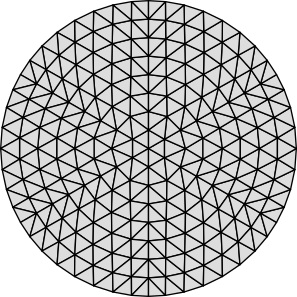
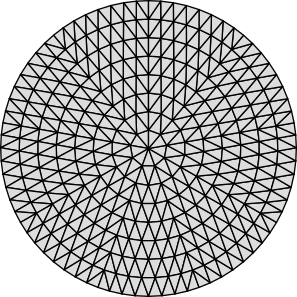
Disk
 |
 |
 |
|---|---|---|
meshzoo.disk(4, 8) |
meshzoo.disk(6, 8) |
meshzoo.disk(9, 8) |
The disk meshes are inflations of regular polygons.
import meshzoo

points, cells = meshzoo.disk(6, 11)

points, cells = meshzoo.disk_quad(10, cell_type="quad4")  # or "quad8", "quad9"
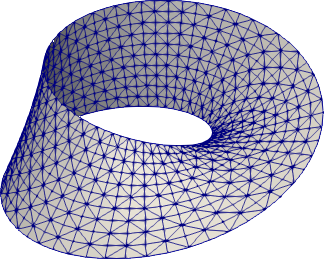
Möbius strip
import meshzoo

points, cells = meshzoo.moebius(num_twists=1, nl=60, nw=11)
Sphere (surface)
 |
 |
|---|
import meshzoo

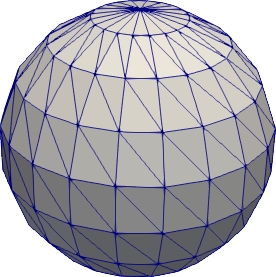
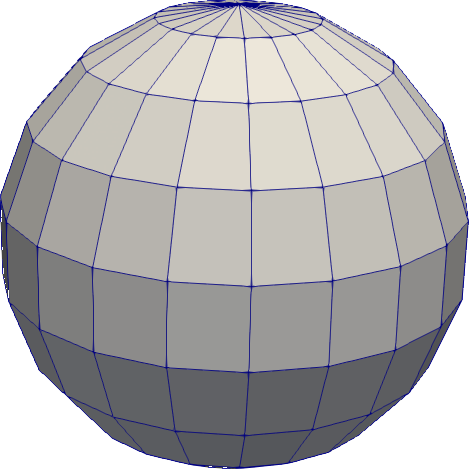
points, cells = meshzoo.uv_sphere(num_points_per_circle=20, num_circles=10, radius=1.0)
points, tri, quad = meshzoo.geo_sphere(
    num_points_per_circle=20, num_circles=10, radius=1.0
)
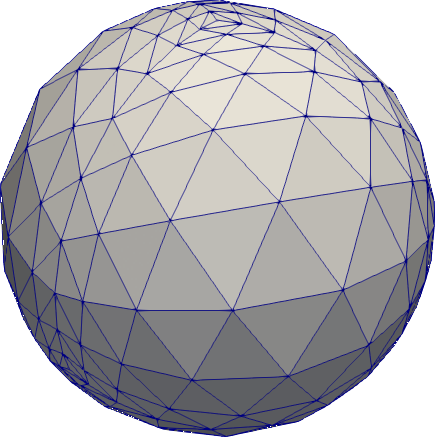
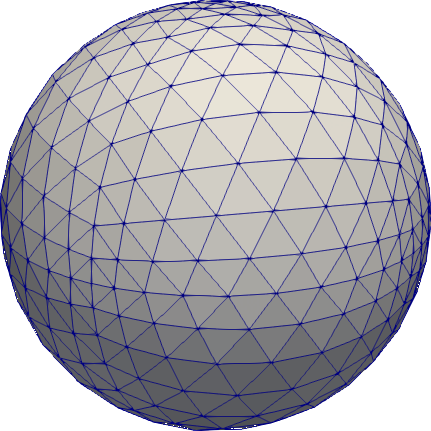
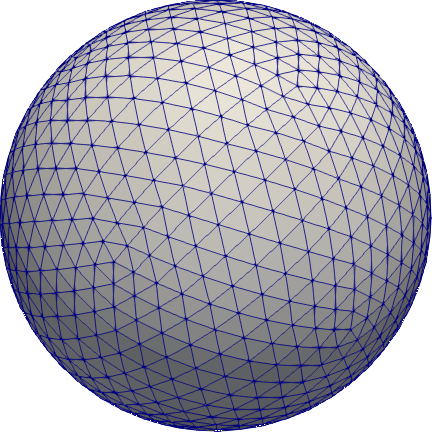
Spheres can also be generated by refining the faces of platonic
solids and then "inflating" them. meshzoo
implements a few of them. The sphere generated from the icosahedron has the
highest-quality (most equilateral) triangles.
All cells are oriented such that its normals point outwards.
 |
 |
 |
|---|---|---|
meshzoo.tetra_sphere(10) |
meshzoo.octa_sphere(10) |
meshzoo.icosa_sphere(10) |
Ball (solid)
 |
 |
|---|
import meshzoo

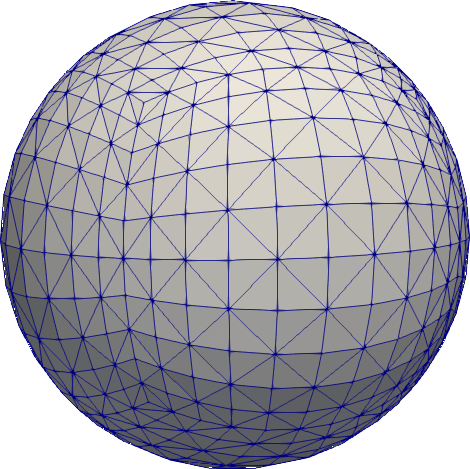
points, cells = meshzoo.ball_tetra(10)
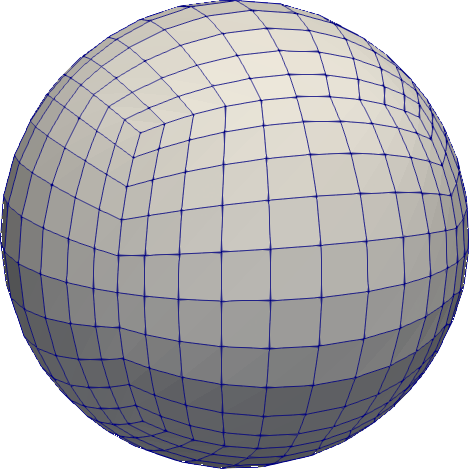
points, cells = meshzoo.ball_hexa(10)
Tube
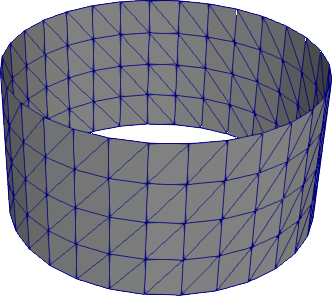
import meshzoo

points, cells = meshzoo.tube(length=1.0, radius=1.0, n=30)
Cube
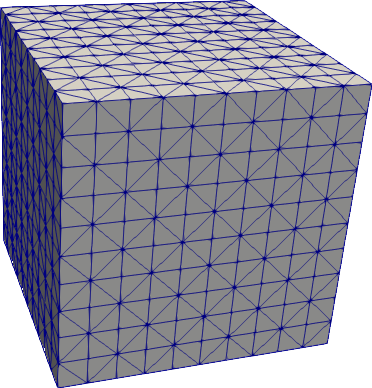 |
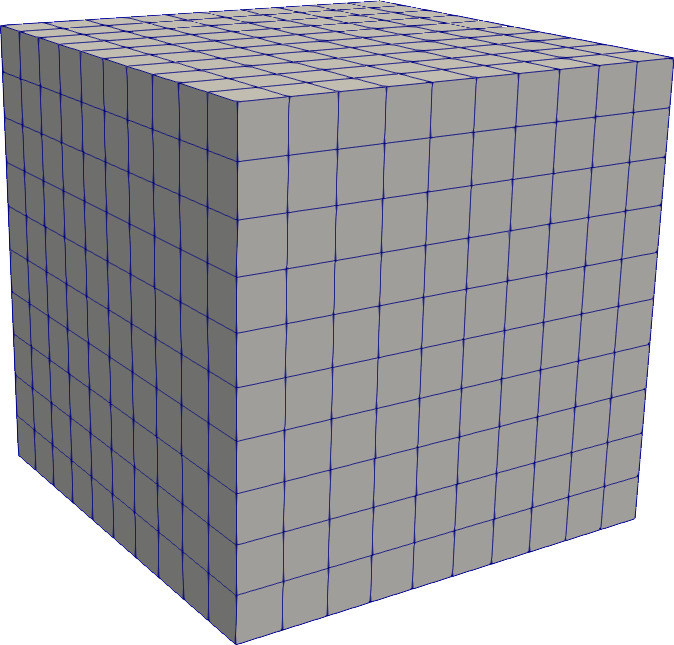 |
|---|
import meshzoo
import numpy as np

points, cells = meshzoo.cube_tetra(
    np.linspace(0.0, 1.0, 11), np.linspace(0.0, 1.0, 11), np.linspace(0.0, 1.0, 11)
)
points, cells = meshzoo.cube_hexa(
    np.linspace(0.0, 1.0, 11), np.linspace(0.0, 1.0, 11), np.linspace(0.0, 1.0, 11)
)